Flatbeds themselves aren’t stacked in use. Cargo on a flatbed can be stacked as long as it’s properly secured and within weight and height limits. Max legal load height for an over-the-road flatbed is typically 13’6″ including the trailer deck.

57+
Years In Business
15+
BRANCH LOCATIONS
4
GENERATIONS OF SERVICE
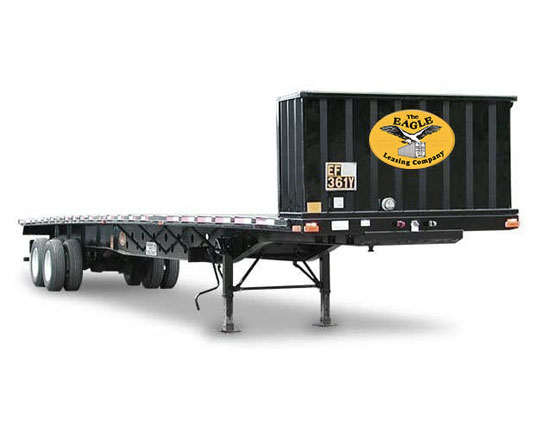
Need to move large, heavy, or awkwardly shaped cargo without the limitations of an enclosed trailer? The standard flatbed is an open platform that lets you load from any side, making it ideal for lumber, steel beams, machinery, concrete, and building materials. Available in lengths from 36 to 53 feet with a 48,000 lb weight capacity, spring or air ride suspension, and the option for camber. Every unit comes standard with headboards, rub rails, and tandem axles, DOT-inspected and ready to go.
Open Platform with Maximum Loading Flexibility With no sides, no roof, and no doors to work around, the standard flatbed lets you load from any direction, by crane, forklift, or side loader. Available in lengths from 36 to 53 feet with a 48,000 lb weight capacity on a tandem axle.
Built-In Standard Equipment Every flatbed comes with headboards, rub rails, and tandem axles as standard. Available with or without camber, and in both spring ride and air ride suspension depending on your cargo and route requirements.
Tarpable for Weather Protection Some loads can travel exposed while others need protection. Our flatbeds are compatible with tarps when your cargo requires shielding from the elements during transit.
DOT-Inspected and Well-Maintained Every unit is processed at one of our state-of-the-art maintenance facilities and is DOT-inspected before delivery so you can count on reliable, road-ready equipment every time.
Load It Any Way the Job Demands When cargo is too large, too heavy, or too awkwardly shaped for an enclosed trailer, the flatbed is the answer. Lumber, steel beams, machinery, concrete products, and building materials all load and unload more efficiently on an open platform.
No Dock Required Flatbeds are ideal when a loading dock is not available. Side loading, crane loading, and forklift loading from ground level are all straightforward with an open platform, giving you flexibility that enclosed trailers simply cannot match.
The Right Suspension for Your Load Spring ride and air ride options mean you can match the trailer to what you are hauling. Air ride provides a smoother, more stable journey for sensitive or high-value cargo, while spring ride is a dependable workhorse for heavy, rugged loads.
Backed by Eagle Leasing Since 1967 Every flatbed in our fleet is maintained at our state-of-the-art facilities and delivered by our professional drivers. Routine maintenance is included free of charge for all rental equipment.

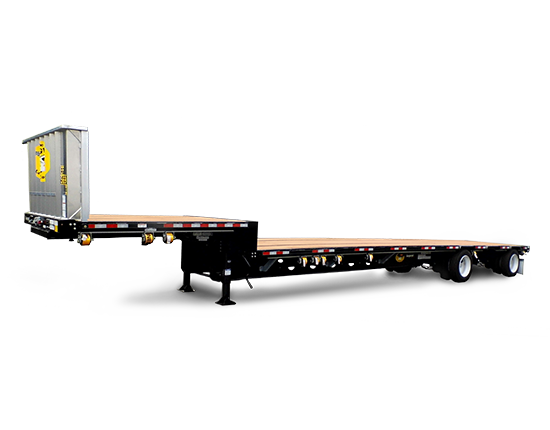
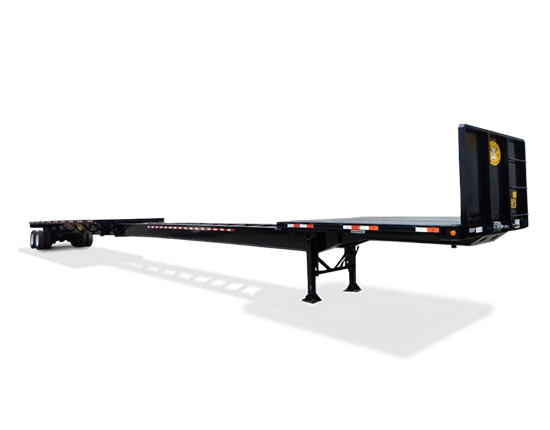
Flatbeds themselves aren’t stacked in use. Cargo on a flatbed can be stacked as long as it’s properly secured and within weight and height limits. Max legal load height for an over-the-road flatbed is typically 13’6″ including the trailer deck.
Some flatbeds include a bulkhead — a headache rack at the front of the trailer that protects the tractor cab from shifted loads. If you need a bulkhead for your specific load, request it when you get your quote. Not every flatbed in our fleet is equipped with one.
On a road trailer rental, flats caused by road hazards or normal use are covered under our maintenance program. Flats caused by neglect, running on an already-flat tire, or abuse are the renter’s responsibility. Report any tire issue to us right away so we can get you back on the road.
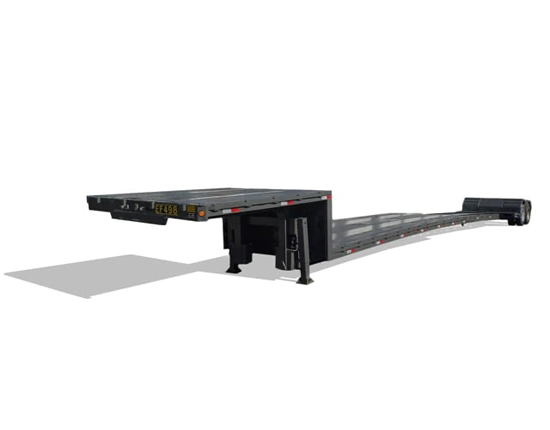
Flatbeds are built for oversized, oddly shaped, or heavy freight that doesn’t fit in a dry van. Common loads: lumber, steel, machinery, construction equipment, prefab components, pipe, roofing materials, and landscaping supplies. Flatbeds load from any side — and overhead.
Use the right combination of chains, binders, straps, edge protectors, and tarps based on the cargo. For heavy machinery, chains rated for the load weight are required — typically four-point tie-down minimum. DOT and FMCSA cargo securement rules apply. When in doubt, consult a qualified driver or your shipping manager before loading.